
Tire Mounting & Balancing: Why You Need Both (And What It Should Cost)
When replacing tires, two separate services usually appear together on the estimate: tire mounting and balancing. They are related, but they solve different problems.
Mounting installs the tire onto the wheel. Balancing corrects uneven weight distribution in the completed wheel-and-tire assembly. Both steps matter for a smooth ride, even tread wear, and proper vehicle handling.
For drivers comparing auto repair Munford TN options, understanding the difference makes it easier to compare estimates and avoid paying for a service without knowing what it includes.
Tire Mounting: Installing the Tire on the Wheel
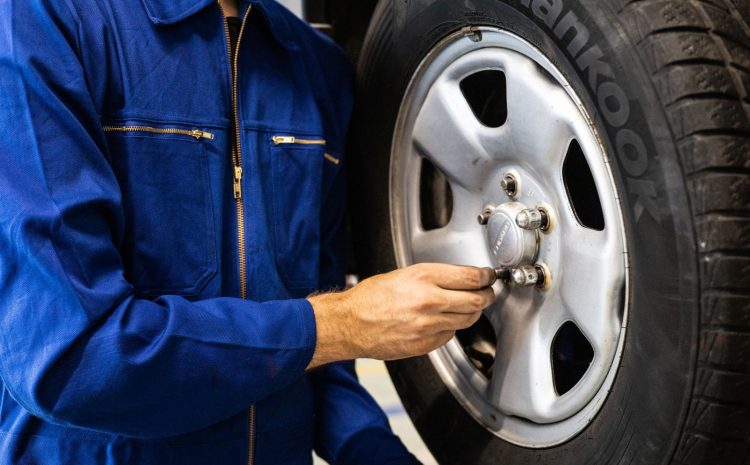
Mounting is the process of fitting the tire onto its wheel. A tire machine removes the old tire, prepares the wheel, and installs the replacement without damaging the bead or wheel.
The basic process generally includes:
- Removing the old tire
- Inspecting the wheel for bends, cracks, or corrosion
- Checking the valve stem and TPMS sensor
- Lubricating the tire bead
- Mounting the new tire onto the wheel
- Seating the bead evenly
- Inflating the tire to the correct pressure
- Checking for leaks
- Installing the wheel on the vehicle
- Torquing the lug nuts to specification
The tire bead must seat evenly against the wheel. If it does not, the assembly may leak, run out of round, or create a vibration even if the balancing process is completed correctly.
Mounting also requires care around tire pressure monitoring system sensors. Many TPMS sensors are attached to the valve stem inside the wheel. Incorrect handling can damage the sensor or its seal, creating an avoidable repair cost.
Mounting is not balancing. A newly mounted tire can be installed correctly and still need weight adjustment before it is ready for regular driving.
Tire Balancing: Correcting Weight Differences
No tire and wheel assembly is perfectly uniform. Small differences in the weight of the tire, wheel, valve stem, and TPMS components can create an imbalance.
During balancing, the technician places the mounted assembly on a balancing machine and spins it. The machine measures where the assembly is heavy or light. The technician then adds small wheel weights in specific locations to counteract the difference.
The goal is a wheel-and-tire assembly that rotates smoothly at driving speed.
Balancing may involve:
- A standard spin balance for regular passenger vehicles
- Clip-on or adhesive wheel weights, depending on the wheel design
- Additional measurements if vibration continues
- More advanced balancing procedures for difficult, oversized, or specialty applications
The balancing machine does not change the alignment angles of the vehicle. It only corrects weight distribution in the wheel-and-tire assembly.
Why Mounting and Balancing Belong Together
Mounting and balancing are separate operations, but they are normally completed during the same tire installation.
Mounting without balancing can cause:
- Steering-wheel vibration
- A shimmy at highway speed
- Uneven tread wear
- Cupping or scalloping across the tread
- Additional stress on wheel bearings and suspension components
- Reduced ride comfort
- Difficulty identifying other handling problems
Balancing without proper mounting is not enough, either. If the bead is not seated correctly, the tire may leak or rotate unevenly. A damaged valve stem or TPMS sensor can also create a pressure warning after installation.
A balanced wheel cannot correct a bent rim, a defective tire, worn suspension parts, or an alignment problem. Those conditions need separate inspection.
The most complete installation includes proper mounting, inflation, balancing, wheel installation, and a final check for tire pressure and visible concerns.
When a Tire Needs Balancing
A balance check is appropriate whenever a new tire is mounted on a wheel. It may also be needed later if the balance changes or a new vibration develops.
Common situations include:
New Tires
Every new tire should be balanced after mounting. Even if the tire and wheel appear fine, the completed assembly may need weights to rotate evenly.
After a Tire Rotation
A rotation does not automatically require balancing every time. However, it is a useful opportunity to check for uneven wear, missing weights, or a developing vibration.
After Hitting a Pothole or Curb
A hard impact can knock off a wheel weight, bend the wheel, damage the tire, or change how the assembly runs. A balance check can help identify whether the wheel and tire remain serviceable.
A Shimmy at Highway Speed
A vibration that becomes noticeable at a particular speed can be related to tire balance. The steering wheel may shake when the issue is at the front axle. A vibration felt mainly through the seat or floor may originate farther back, although a proper inspection is needed before identifying the cause.
A Missing Wheel Weight
Wheel weights can detach from a wheel after impacts, corrosion, tire service, or contact with road debris. The missing weight may leave a clean rectangular mark or adhesive residue on the wheel.
A rebalance may be enough, but the technician should also inspect the tire and wheel for damage.
Balancing Versus Wheel Alignment
Balancing and alignment address different issues.
Balancing corrects uneven weight distribution in a wheel-and-tire assembly.
Alignment adjusts the vehicle’s steering and suspension angles, including camber, caster, and toe, when those angles are adjustable and correction is possible.
A vehicle can have:
- Correct alignment but an unbalanced tire
- Balanced tires but poor alignment
- Both problems at the same time
- Neither problem, with a vibration caused by a bent wheel, damaged tire, worn suspension, or another component
A fresh balance pairs well with an alignment check when new tires are installed, especially if the old tires showed uneven wear or the vehicle pulls to one side.
Pop’s Full Service provides tire services and precision alignments in Munford, TN using state-of-the-art Hunter alignment equipment. Alignment details are available on the Munford alignment service page.
What Tire Mounting and Balancing Should Cost in 2026
There is no single fair price for every vehicle. Tire size, wheel design, tire type, TPMS equipment, and local labor rates all affect the final amount.
For a standard passenger car or crossover with ordinary tire sizes, a reasonable 2026 planning range is approximately:
| Service | Typical planning range |
|---|---|
| Mounting only | $10–$25 per tire |
| Balancing only | $15–$30 per tire |
| Mounting and balancing | $15–$45 per tire |
| Four-tire mounting and balancing | $60–$180 per set |
These figures are general market ranges rather than a fixed Pop’s Full Service price. Published tire installation guides, including Discount Tire’s installation cost breakdown, note that installation charges may include several separate items beyond basic machine labor.
The final estimate may also include:
- TPMS service kits
- Valve stems
- TPMS relearn or programming
- Tire disposal
- Shop or environmental fees
- Wheel cleaning
- Additional time for difficult tire and wheel combinations
For a regular set of four tires, a total around $100–$200 can be reasonable after common parts, disposal, and service fees are included. The actual amount depends on what is included in the shop’s package.
Why Larger and Specialty Tires Cost More
A standard passenger tire is usually faster to mount and balance than a wide, low-profile, run-flat, or oversized tire.
Higher labor or service charges may apply to:
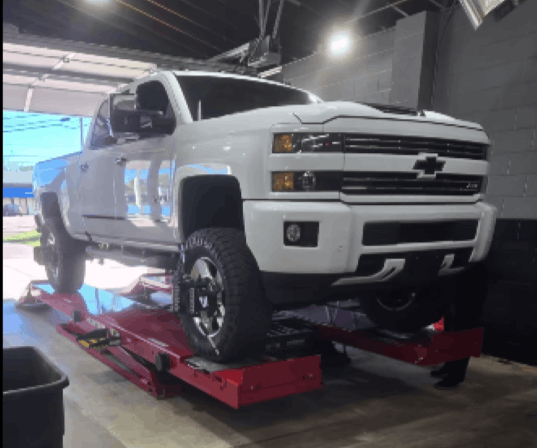
- Oversized truck tires
- Lifted-vehicle applications
- Wide mud-terrain tires
- Low-profile performance tires
- Run-flat tires
- Large aftermarket wheels
- Wheels with delicate finishes
- Tire and wheel combinations requiring additional balancing work
Stiff sidewalls and heavy assemblies require more care and may take longer to balance. Pop’s Full Service handles standard, oversized, and aftermarket fits. A clear estimate should identify whether the quote is for basic mounting and balancing or includes additional procedures.
Before approving the work, it is reasonable to ask whether the estimate includes:
- Mounting
- Standard balancing
- TPMS parts or service
- Tire disposal
- Valve stems
- Any additional charge for oversized or aftermarket applications
An itemized quote makes comparisons more useful than comparing one advertised package price with another that excludes parts and fees.
Tire Mounting and Balancing in Munford, TN
Tire mounting and balancing are not cosmetic services. Mounting secures the tire to the wheel and allows the bead to seal correctly. Balancing helps the completed assembly rotate smoothly.
Both are appropriate when installing new tires. A balance check may also be needed after a pothole or curb impact, after losing a wheel weight, or when a highway-speed vibration appears.
For tire service, alignment checks, brakes, suspension work, and general maintenance, Pop’s Full Service serves Munford and surrounding Tipton County communities. The complete services page lists available automotive repair services.
Summary: Mounting puts the tire on the wheel. Balancing corrects weight differences after installation. For most standard vehicles in 2026, $15–$45 per tire is a reasonable general benchmark for the combined service, with additional costs possible for TPMS, oversized tires, aftermarket wheels, and specialty applications.
Call Pop’s Full Service at 901-837-6252 or stop by 1315 Munford Ave, Munford, TN for a tire mounting and balancing estimate.