5 Steps to Prep Your Car for Fall in Munford, TN (Easy Guide for Busy Families)
The transition from summer to fall brings cooler mornings, more school and work commutes, shorter daylight hours, and wetter roads around Munford and Tipton County. A short maintenance check now can help identify tire, brake, fluid, visibility, and battery problems before they become inconvenient or unsafe.
These five car maintenance tips cover the main areas busy families should check in early fall.
1. Check Tire Pressure, Tread, and Alignment
Cooler temperatures can reduce tire pressure. AAA notes that tire pressure typically drops approximately 1 PSI for every 10-degree Fahrenheit decrease in temperature. Underinflated tires can affect handling, braking, fuel economy, and tread wear.
Fall tire checklist
- Check all four tires when they are cold
- Check the spare tire
- Inflate tires to the PSI listed on the driver’s door-jamb sticker or owner’s manual
- Inspect for cuts, cracks, punctures, and sidewall bulges
- Check tread wear across the full width of each tire
- Look for uneven wear on the inside or outside edges
- Confirm valve stem caps are installed
- Schedule a rotation if the maintenance interval is due
The penny test can provide a basic tread check, but it is not a substitute for a professional inspection. A technician can measure tread depth accurately and identify uneven wear caused by alignment, suspension, balance, or inflation problems.
Fall rain makes tread especially important. Tires with worn channels have less ability to move water away from the contact patch, which can reduce traction on wet roads.
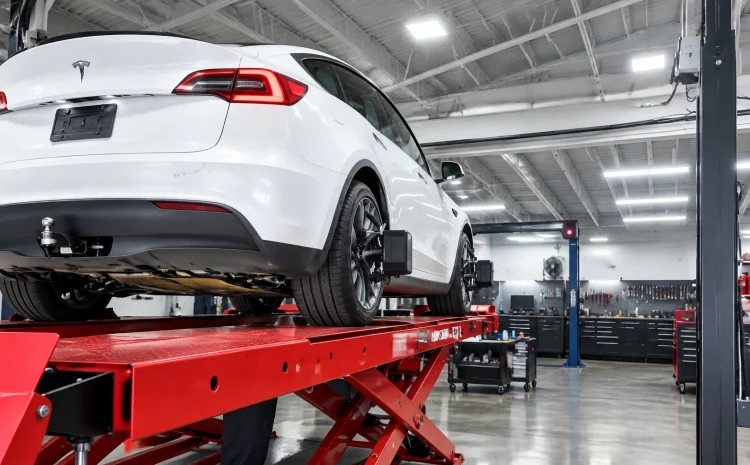
A vehicle that pulls to one side, has a crooked steering wheel, or shows uneven tire wear may need an alignment. Pop’s Full Service provides precision alignments using state-of-the-art Hunter equipment, along with tire mounting, balancing, rotation, and service for standard, oversized, and aftermarket fits.
View Pop’s Full Service tire and alignment services or review the alignment service page.
2. Check Coolant, Oil, and Other Fluids
Summer heat places additional stress on engine fluids, hoses, belts, and cooling-system components. Before overnight temperatures continue to fall, check the coolant level and confirm that the antifreeze mixture meets the vehicle manufacturer’s requirements.
Only check the coolant overflow tank when the engine is completely cool. Do not remove a radiator cap from a hot engine. If the coolant level is low, use the correct coolant type and mixture listed in the owner’s manual. Many vehicles use a 50/50 coolant-and-water mixture, but specifications vary by vehicle.
Fluids to check before fall
- Engine coolant and antifreeze protection
- Engine oil level and service interval
- Brake fluid level
- Transmission fluid, where applicable
- Power steering fluid, where applicable
- Windshield washer fluid
Low coolant can indicate a leak rather than normal fluid consumption. Signs of a possible cooling-system problem include repeated low levels, overheating, visible leaks, a sweet odor, or temperature-gauge changes.
Oil changes should follow the vehicle manufacturer’s mileage or time interval. Short trips, frequent idling, stop-and-go traffic, towing, and severe weather may affect the recommended schedule. The correct oil grade is listed in the owner’s manual or maintenance information.
Washer fluid also deserves attention. Fill the reservoir with an all-season or cold-weather formula suitable for the temperatures expected in the region. Plain water can freeze and may not remove road film effectively during fall rain.
Pop’s Full Service offers oil changes and general maintenance for domestic and foreign vehicles. The team can also check fluid levels and identify maintenance concerns during a scheduled service.
Review Pop’s full-service maintenance options.
3. Inspect the Brakes Before Wet and Cold Weather
Fall driving can involve rain, wet leaves, early-morning frost, and more nighttime traffic. Brake problems that seem minor during summer should not be postponed until colder weather arrives.
Brake warning signs
- Squealing or scraping
- Grinding sounds
- Pulsation through the brake pedal or steering wheel
- A soft or spongy pedal
- A vehicle pulling during braking
- Longer stopping distances
- Brake warning light illumination
- Vibration when slowing down
Brake noise does not always identify the exact problem. Squealing may involve brake-pad wear or hardware, while grinding can indicate metal-to-metal contact. Pulsation may be associated with rotor condition, but a complete inspection is necessary to determine the cause.
A soft pedal can indicate air, moisture, a hydraulic issue, or another brake-system concern. It should be inspected promptly rather than treated as a seasonal inconvenience.
A professional brake inspection generally includes the pads, rotors, calipers, hoses, lines, fluid, and related components. Replacing only one visible part may not address the underlying issue.
Pop’s Full Service repairs and replaces brake pads, rotors, and related components. Recommendations are based on inspection results, vehicle needs, and safety concerns: not unnecessary repairs.
Schedule a brake or general vehicle inspection.
4. Replace Worn Wipers and Check Every Light
Fall brings shorter days and more driving in low-light conditions. Rain, glare, and dirty windshields can make visibility more difficult, particularly during morning school and work commutes.
Wiper blades should clear the windshield evenly with each pass. Replace them if they:
- Leave streaks
- Skip across the glass
- Squeak repeatedly
- Miss sections of the windshield
- Have cracked, split, or hardened rubber
Check the washer-fluid spray pattern as well. Weak spray may indicate a clogged nozzle, damaged hose, or low fluid level.
Inspect all exterior lights, including:
- Headlights
- Taillights
- Brake lights
- Turn signals
- Hazard flashers
- Reverse lights
- Fog lights, if equipped
- License-plate lights
A burned-out bulb reduces visibility and makes the vehicle harder for other drivers to see. Dirty headlight lenses can also reduce illumination. Clean lenses carefully and replace damaged or severely cloudy assemblies as needed.
When checking lights, activate each function while another household member walks around the vehicle. This takes only a few minutes and can identify a problem before a nighttime or rainy commute.
5. Test the Battery and Charging System
Cooler temperatures can expose a weak battery. A battery that starts the vehicle normally on a warm summer morning may struggle during a cold snap, especially if it is several years old or the vehicle is driven mostly on short trips.
Battery checks for early fall
- Check the battery age
- Look for slow engine cranking
- Inspect terminals for corrosion
- Confirm cable connections are tight
- Look for damaged or swollen battery casing
- Test battery voltage and starting capacity
- Test the alternator and charging system
Battery age varies by vehicle, climate, use, and maintenance history. A professional battery test provides more useful information than appearance alone. A battery can look clean and still have reduced starting capacity.
Corrosion around the terminals can interfere with electrical flow. Loose or damaged cables can create starting and charging problems. If the battery light appears on the dashboard, the issue may involve the alternator, belt, wiring, or battery rather than the battery alone.
Ask for a charging-system test if the vehicle has dimming lights, repeated no-start conditions, electrical warning lights, or a battery that repeatedly loses charge.
A Practical Fall Maintenance Schedule for Busy Families
A full check does not have to happen all at once.
This week
- Check tire pressure
- Inspect tread and sidewalls
- Test headlights, brake lights, and turn signals
- Check wiper performance
During the next fuel stop
- Check the coolant overflow level when the engine is cold
- Check oil level
- Fill washer fluid
- Look for visible leaks
Before a longer fall trip
- Schedule a brake inspection
- Test the battery and charging system
- Request a tire rotation, balance, or alignment if wear is uneven
- Confirm the next oil-change interval
Auto Repair in Munford, TN for Seasonal Service
Pop’s Full Service has served Munford and surrounding Tipton County communities since 1996. The shop handles oil changes, brake and rotor repair, tire mounting and balancing, precision alignments, suspension repair, and general automotive maintenance for all makes and models.
ASE-certified and NAPA AutoCare technicians combine modern equipment with practical service recommendations. Customers receive information about observed conditions and approval is requested before recommended work is completed.
For fall preparation, contact Pop’s Full Service at 901-837-6252 or visit 1315 Munford Ave, Munford, TN 38058. Request an appointment online for tire service, brake checks, alignments, oil changes, and other fall maintenance needs.