
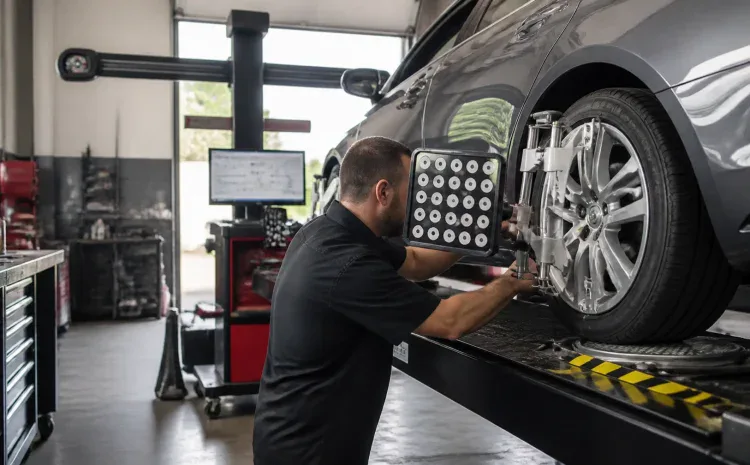
Wheel Alignment Near You: 7 Warning Signs Your Tires Are Begging for One
A vehicle can develop alignment problems without making a loud noise or leaving an obvious warning light on the dashboard. Small changes in how the wheels sit and point may first show up through the tires, steering wheel, or handling.
Misalignment can happen after hitting a pothole, bumping a curb, replacing suspension components, or simply through normal wear over time. Catching the signs early may help prevent premature tire wear and additional repair needs.
Here are seven signs that it may be time to look for a wheel alignment near Munford, TN.
1. The Vehicle Pulls to One Side
A vehicle that consistently drifts left or right on a reasonably level road may have an alignment issue.
Some roads naturally slope toward the shoulder for drainage, so a slight movement in one direction does not always indicate a problem. The concern is a noticeable or consistent pull that requires frequent steering corrections.
Possible causes include:
- Incorrect wheel alignment angles
- Uneven tire pressure
- Tire wear or tire damage
- Worn steering or suspension components
Checking tire pressure is a reasonable first step. If the pressure is correct and the vehicle still pulls, an inspection can help determine whether the issue involves alignment, tires, or the front end.
2. Tire Tread Is Wearing Unevenly
Healthy tires should generally wear evenly across the tread when inflation, rotation, suspension, and alignment are all in good condition. Misalignment can place extra force on one section of the tire.
Common patterns include:
- More wear along the inside edge
- More wear along the outside edge
- Feathered tread blocks that feel smooth in one direction and sharp in the other
- One tire wearing faster than the others
Uneven tire wear does not automatically prove that alignment is the only problem. Incorrect inflation, worn suspension parts, lack of rotation, and tire balance issues can also contribute. Still, unusual wear is a good reason to have the tires and alignment checked together.

3. The Steering Wheel Is Off-Center
When the vehicle is traveling straight, the steering wheel should usually sit close to center. If it remains noticeably turned while the vehicle tracks straight, the alignment may need attention.
An off-center steering wheel can develop after:
- A pothole or curb impact
- Suspension or steering repair
- A previous alignment
- Changes to ride height
- Normal wear in steering and suspension components
The steering wheel position is useful information, but it is not a complete diagnosis by itself. A technician should check the alignment angles and inspect related components before making adjustments.
4. The Steering Wheel Vibrates
A shaking or vibrating steering wheel can sometimes occur when the wheels are not aligned correctly. However, alignment is only one possible cause.
Vibration may also be related to:
- An out-of-balance wheel or tire
- A bent wheel
- A damaged or separated tire
- Worn suspension or steering components
- Brake-related problems, particularly when vibration occurs during braking
The speed and conditions make a difference. Vibration that appears mainly at highway speeds may point toward tire balance or wheel concerns. Vibration while braking may require a brake inspection. A professional check can separate these possibilities instead of assuming every vibration requires an alignment.
5. The Vehicle Feels Loose or Wanders
A vehicle that wanders, feels vague, or requires constant corrections may not be tracking properly. Drivers may describe the sensation as having to “chase” the vehicle down the road.
Potential causes include:
- Incorrect toe or caster angles
- Worn tie rods or ball joints
- Weak shocks or struts
- Low or uneven tire pressure
- Excessive play in steering components
This symptom deserves attention because it can affect control and confidence while driving. Alignment adjustments may correct the problem when the angles are out of specification, but worn parts may need to be repaired first.
6. The Tires Squeal During Ordinary Turns
A brief tire chirp during a hard turn does not necessarily indicate a problem. Repeated squealing, scrubbing, or rubbing sounds during normal turns may be different.
Misaligned wheels can make the tires work against one another instead of rolling cleanly in the intended direction. That extra friction may produce noise and contribute to accelerated tread wear.
Recurring tire noise can also result from:
- Low tire pressure
- Tire damage
- Excessive steering angle
- Worn suspension parts
- Road surface conditions
If the sound happens regularly during everyday driving, an inspection of the tires, steering, suspension, and alignment is appropriate.
7. Fuel Economy Has Dropped Without an Obvious Reason
Misalignment can increase rolling resistance because the tires are not traveling in the same direction as efficiently as they should. In some cases, that added resistance may contribute to lower fuel economy.
Fuel mileage can change for many other reasons, including:
- Colder weather
- More idling or short trips
- Heavier cargo
- Different driving habits
- Low tire pressure
- Engine or fuel-system maintenance issues
A fuel-economy change by itself is not enough to diagnose an alignment problem. It becomes more useful when it appears alongside pulling, uneven tire wear, or an off-center steering wheel.
Alignment, Tire Balance, and Suspension: Different Issues
These services are related, but they do different jobs.
- Wheel alignment: Adjusts wheel angles so the tires point and track correctly.
- Tire balancing: Corrects weight differences in the tire and wheel assembly to reduce vibration.
- Suspension repair: Addresses worn or damaged components such as shocks, struts, and related parts.
- Tire service: Covers mounting, balancing, rotation, repair, replacement, and inspection.
A vehicle may need one service or several. For example, a pothole can damage a tire, bend a wheel, and change alignment angles at the same time. An honest inspection should identify the actual cause before repairs are recommended.
The National Highway Traffic Safety Administration’s tire guidance also emphasizes regular tire condition and pressure checks. These basic checks do not replace an alignment inspection, but they can help identify problems earlier.
When to Schedule an Alignment Inspection
An alignment check is reasonable when:
- The vehicle pulls or drifts
- The steering wheel is off-center
- Tire tread is wearing unevenly
- A curb or pothole was hit hard
- Steering feels loose or unstable
- New tires were installed
- Suspension or steering work was completed
- The vehicle’s ride height was changed
There is no need to approve unnecessary work based on a single symptom. A technician can measure the alignment, inspect the front end, and explain what is out of specification. If the angles are within range, the next step may involve tire balance, inflation, suspension, or another component.
Wheel Alignment Near Munford, TN
Pop’s Full Service provides precision alignment services for domestic and foreign vehicles of all makes and models. The shop uses state-of-the-art alignment equipment and can inspect related steering, suspension, and tire concerns.
The alignment service page includes information about camber, caster, and toe adjustments, front-end inspection, suspension service, and tire services. Pop’s also provides tire mounting and balancing, suspension repair, and general automotive maintenance.
Located at 1315 Munford Ave, Munford, TN 38058, Pop’s serves vehicle owners throughout Munford and surrounding Tipton County communities. Regular business hours are Monday through Friday, 7:00 a.m. to 5:00 p.m.
Summary and Service Information
Pulling, uneven tread wear, an off-center steering wheel, vibration, wandering, recurring tire noise, and unexplained fuel-economy changes can all justify a closer look. None of these signs confirms an alignment problem on its own, but several appearing together should not be ignored.
For an honest alignment inspection without pressure to approve unnecessary repairs, contact Pop’s Full Service, book an appointment, or call 901-837-6252.